A Culture of Care: How Oakridge Gachibowli Practices Health, Safety, and Safeguarding in Daily Routines
- 16 July 2026

Most parents think hard about school safety exactly once, during admissions. It’s an instinct: you want reassurance before you commit. But real confidence isn’t built in that one conversation. It’s built over months of small, repeated moments where a school proves it does what it says it will do, every single day.
At Oakridge International School Gachibowli, safety isn’t a folder of policies that gets pulled out for inspections. It’s stitched into the rhythm of the school day, so quietly that most students never think about it. That’s exactly the point.
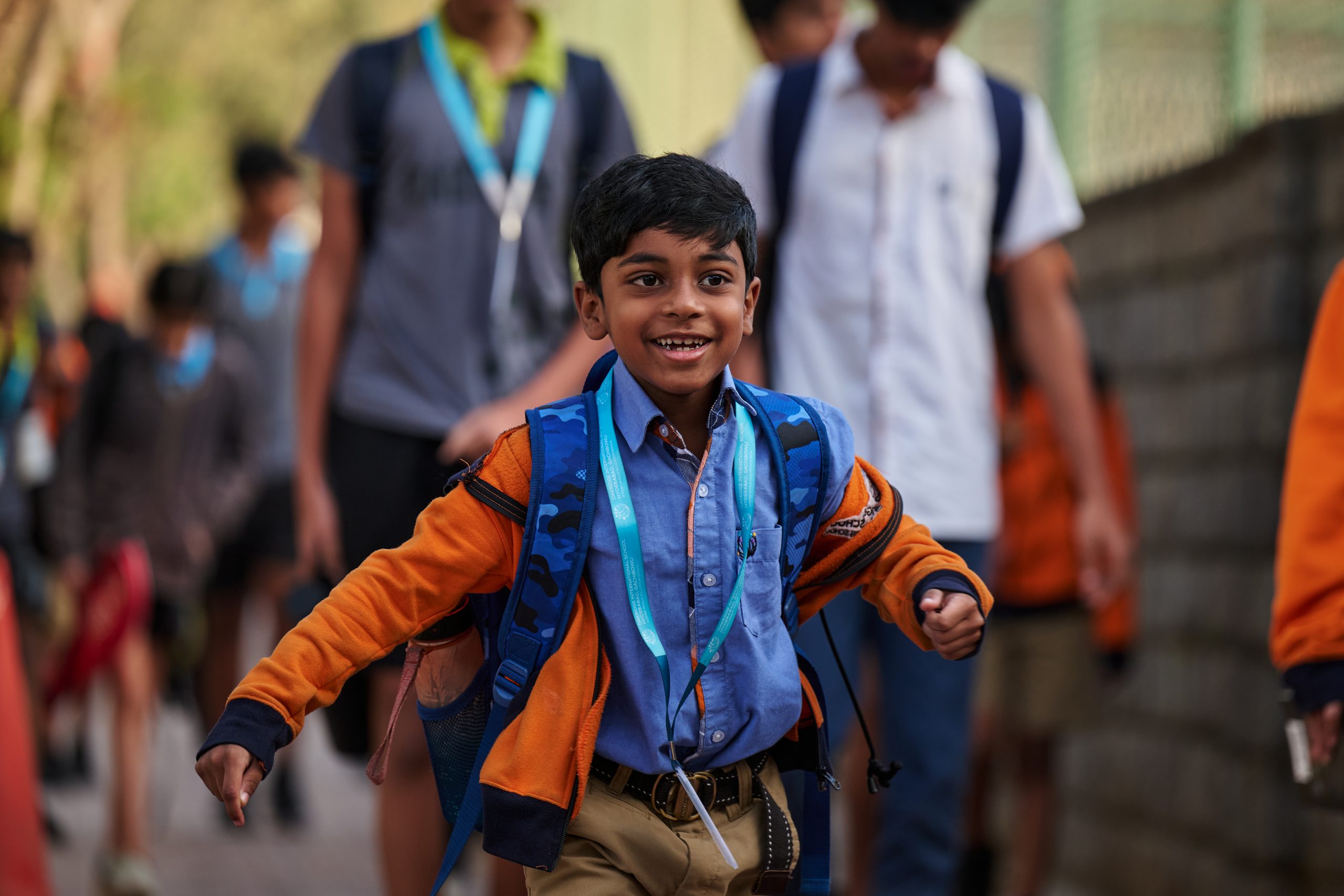
Long before a lesson begins, the groundwork for a safe day has already been laid. Transport routes are planned, campus entry is monitored, and early supervision is in place, so students arrive in a settled, predictable environment rather than a scramble.
Mr Alam, Head of Operations and Health & Safety Lead at Oakridge Gachibowli, puts it simply: “For us, safety isn’t just a policy. It’s how we run the school every single day. It starts even before a child step onto the school bus and continues through the gates, into the classrooms, and until they head home.”
That predictability matters more than it might seem. A child who isn’t second-guessing whether they’ll get to class on time, or whether the campus feels chaotic, walks in ready to learn.
Good safety infrastructure has an odd quality: when it’s working, you barely notice it. At Oakridge Gachibowli, entry points run on strict identification checks, visitors move through defined protocols, and a campus-wide network of over 1,100 CCTV cameras keeps blind spots to a minimum.
None of this is about surveillance for its own sake. It’s about making sure teachers can teach without half their attention on hallway traffic, and students can move around campus without friction. The Health and Safety team runs regular audits across fire safety, electrical systems, playground equipment, and kitchen operations, alongside risk assessments for campus events and route recces before any off-campus trip. It’s unglamorous, recurring work, but it’s the kind that prevents problems rather than reacting to them.
Staff readiness closes the loop. Every teaching and support staff member goes through background checks and structured child safety training at the start of the academic year, so safeguarding expectations aren’t left to interpretation. They’re shared knowledge across the whole campus.
Prevention only gets you so far. The other half of safety is knowing what to do when something goes wrong, and that only comes from practice, not paperwork.
Fire and lockdown drills happen on a regular schedule at Oakridge Gachibowli, not as a box-ticking exercise but as genuine rehearsal. As Mr Alam explains, “For emergencies, we don’t just rely on written procedures. We run regular drills, so everyone understands where to go and what to do without hesitation.”
There’s a real difference between a student who’s read about a fire drill and one who’s walked the route a dozen times. The second one doesn’t panic. That calm, built through repetition, is worth more than any laminated instruction sheet.
Safety isn’t only about locked doors and drills. It extends to the ordinary conditions that keep a child steady through the day: nutritious meals and a properly staffed infirmary for anything from a scraped knee to a fever. A student who’s physically looked after through the day has an easier time staying focused in the afternoon than one who isn’t.
Just as important is something harder to measure: whether staff are actually approachable. A camera can catch an incident, but it can’t replace a teacher a child feels comfortable walking up to. That everyday accessibility is often what catches a small problem before it becomes a bigger one.
Safety also shows up in decisions that have nothing to do with drills or checklists, in how a school chooses to renovate its own spaces. At Oakridge Gachibowli, upgrading learning areas is treated as an ongoing commitment rather than a one-time capital project, with each renovation weighing three things together: safety, ease of learning, and a sense of inspiration.
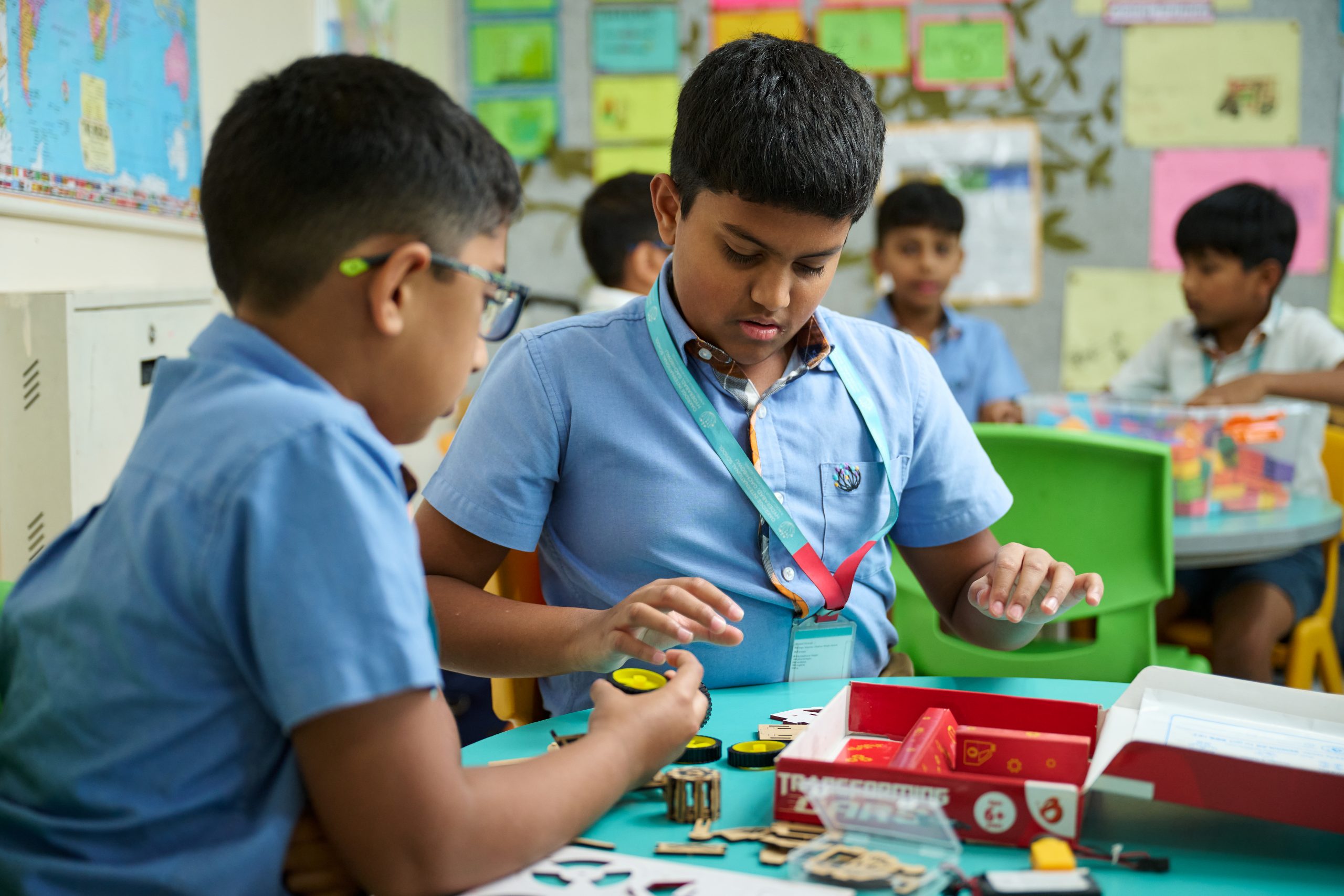
That approach is visible in what’s already been completed. The student library has been reworked into a more open, accessible space. The computer labs, activity rooms, and design lab have all been modernised with updated layouts and equipment, and a dedicated Lego lab has been introduced as a new space for hands-on, creative building. Outdoors, the artificial football turf gives students a consistent, injury-conscious surface to play on regardless of weather, and a temperature-controlled splash pool means swimming stays a safe, comfortable option through the year rather than a seasonal one.
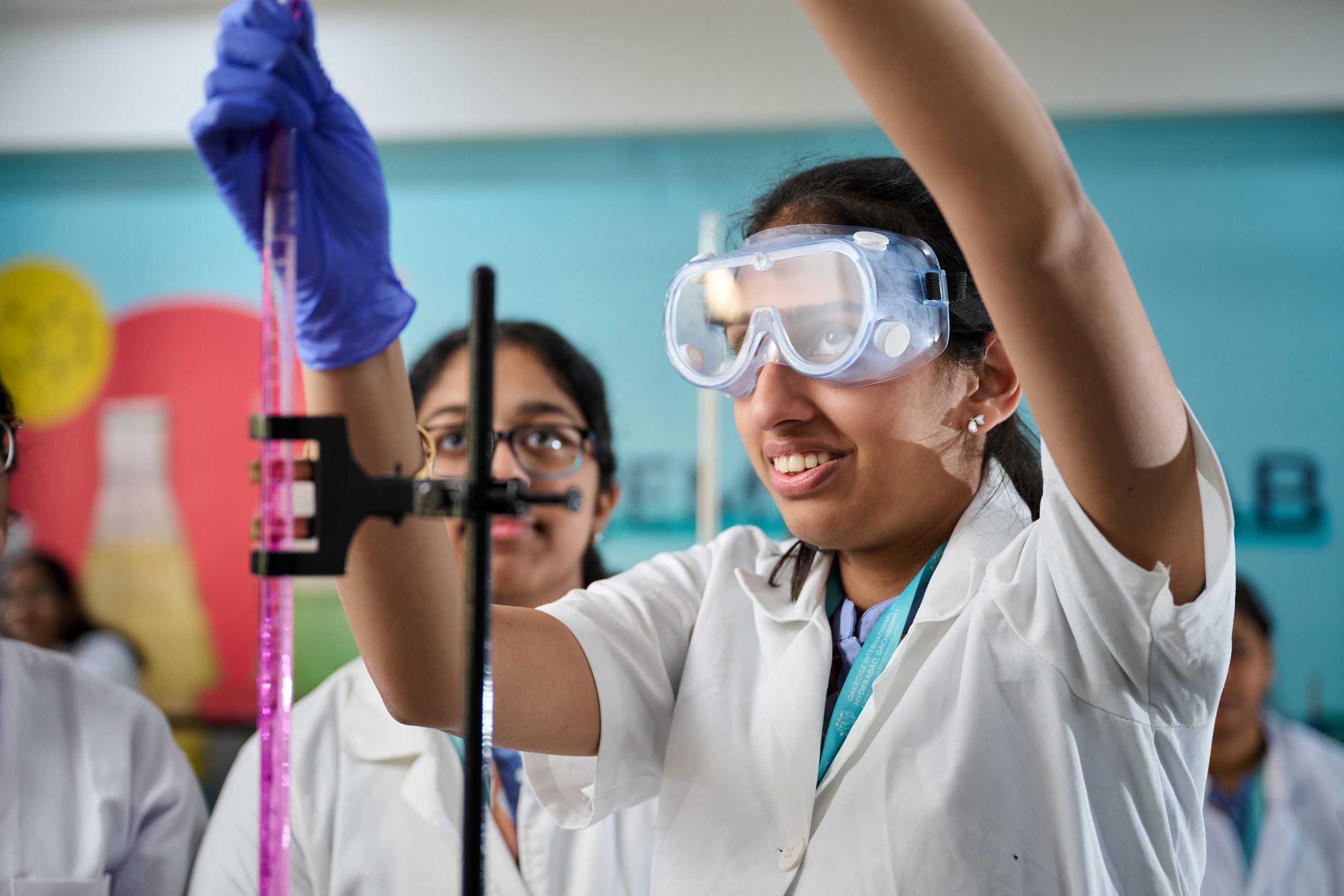
More renovations are already in motion. The school entrance is being redesigned, the senior wing is set for a full renovation of its classrooms, corridors, and washrooms, and the chemistry labs are due for an upgrade as well. Each of these is being approached the same way, not as cosmetic refreshes, but as a chance to build spaces that are genuinely safer and better suited to how students learn.
Children don’t experience safety as a system. They experience it as a feeling. A secure campus, paired with genuinely attentive adults, tells a student one simple thing: there’s always someone to talk to. Mr Alam sums it up this way, “When you combine a secure campus with a team that is observant and approachable, children know there is always someone they can talk to. That creates a warm environment where they can focus on being students.” That sense of ease shows up in the classroom in concrete ways. Students who feel secure ask more questions, take more risks with their answers, and participate more freely.
For families weighing International Schools in Gachibowli, safety shouldn’t be a box checked once during a campus tour. At Oakridge Gachibowli, it’s treated as something that has to be earned each day again, through consistent systems, trained people, and attentive care rather than one-off assurances. The clearest way to understand how this works isn’t through a brochure. It’s through a conversation about what an ordinary Tuesday on campus looks like. Visit our school today.