Bloom’s Taxonomy in Action: How Week Without Walls Brought Learning to Life
If Bloom’s Taxonomy were being reimagined for today, I wouldn’t begin with pyramids, verbs, formulae, worked examples, or assessment theory. I would begin with reality! With how our students think, react, question, resist, and ultimately learn. Because this is no longer about classroom theory, this is about classroom survival, with meaning and impact.
As a teacher who has witnessed learning shift with every new cohort, one truth stands out clearly. Teaching is no longer about delivering information. It is about designing experiences. Week Without Walls at Oakridge International School, Gachibowli, was the clearest expression of that truth. At Week Without Walls, all dimensions of Bloom’s Taxonomy were authentically experienced: remembering, understanding, applying, analyzing, evaluating, and creating, making learning not just visible, but unforgettable.
Seen through this lens, Bloom’s Taxonomy was not a diagram on a slide. It was alive, on stage, in corridors, in classrooms, and in conversations.
- Remembering
Not memorizing facts, but anchoring meaning. Across KHOJ – Udaan Se Pehchaan Tak, young learners remembered what mattered because learning was emotionally tagged and visually rich. Teachers noticed that when ideas were wrapped in stories, movement, color, and curiosity, they stayed. As one teacher reflected, “They may forget the words, but they’ll remember how it felt to discover.”
- Understanding
Understanding, too, has changed. Understanding did not arrive through silent listening. It emerged through reconstruction. Across the academic exhibitions in Math and Science, students didn’t recite definitions. They explained concepts in their own words: through models, comparisons, and demonstrations. Teachers didn’t ask, “Do you understand?” Clarity grew naturally, when they asked, “How would you explain this to someone younger than you?”
Gen Z learns through paraphrasing, remixing, and re-explaining. They prefer short explanations, immediate re-expression, and low risk sharing. If they can’t say it simply, they don’t own it yet.
- Applying
Learning became real when it stepped beyond worksheets. “Where does this show up in real life?”, asked one of our students. Week Without Walls answered that question, …everywhere, viz., Dance. Drama. Orchestra. Fashion. Visual Arts. Academic showcases.
Students were not solving problems in isolation. They were testing ideas in authentic contexts and were asked, “If this were real, what would you do first?” which shifted the focus towards engagement.
- Analyzing
Students compared, questioned, and connected ideas. Thoughts like, “Why did this fail?” mattered more than “What’s the answer?”
Through dialogue, contrast, and discussions, thinking was respected. Energy rose, not because answers were given, but because reasoning was invited.
- Evaluating
Evaluation followed naturally. Not as chaos, but as guided judgement. Clear criteria helped our students move from opinion to reflection. They refined performances, redesigned displays, and improved presentations with maturity and purpose, thus making evaluation a shared language, not a test!
- Creating
This is where learning truly came alive!
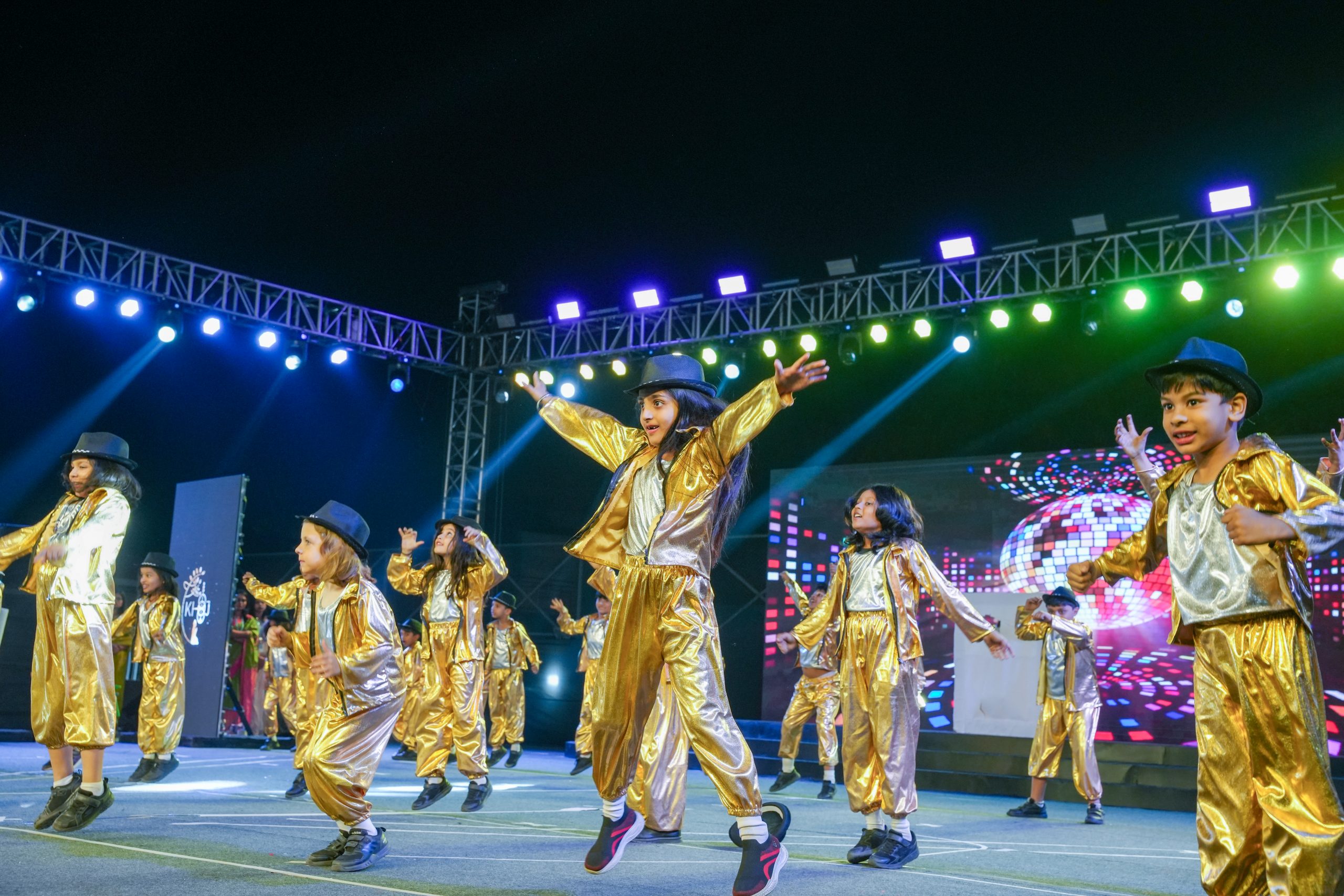
KHOJ 2025 – Ek Sapno Ka Safar saw Early Years learners bring imagination, confidence, and curiosity to life.
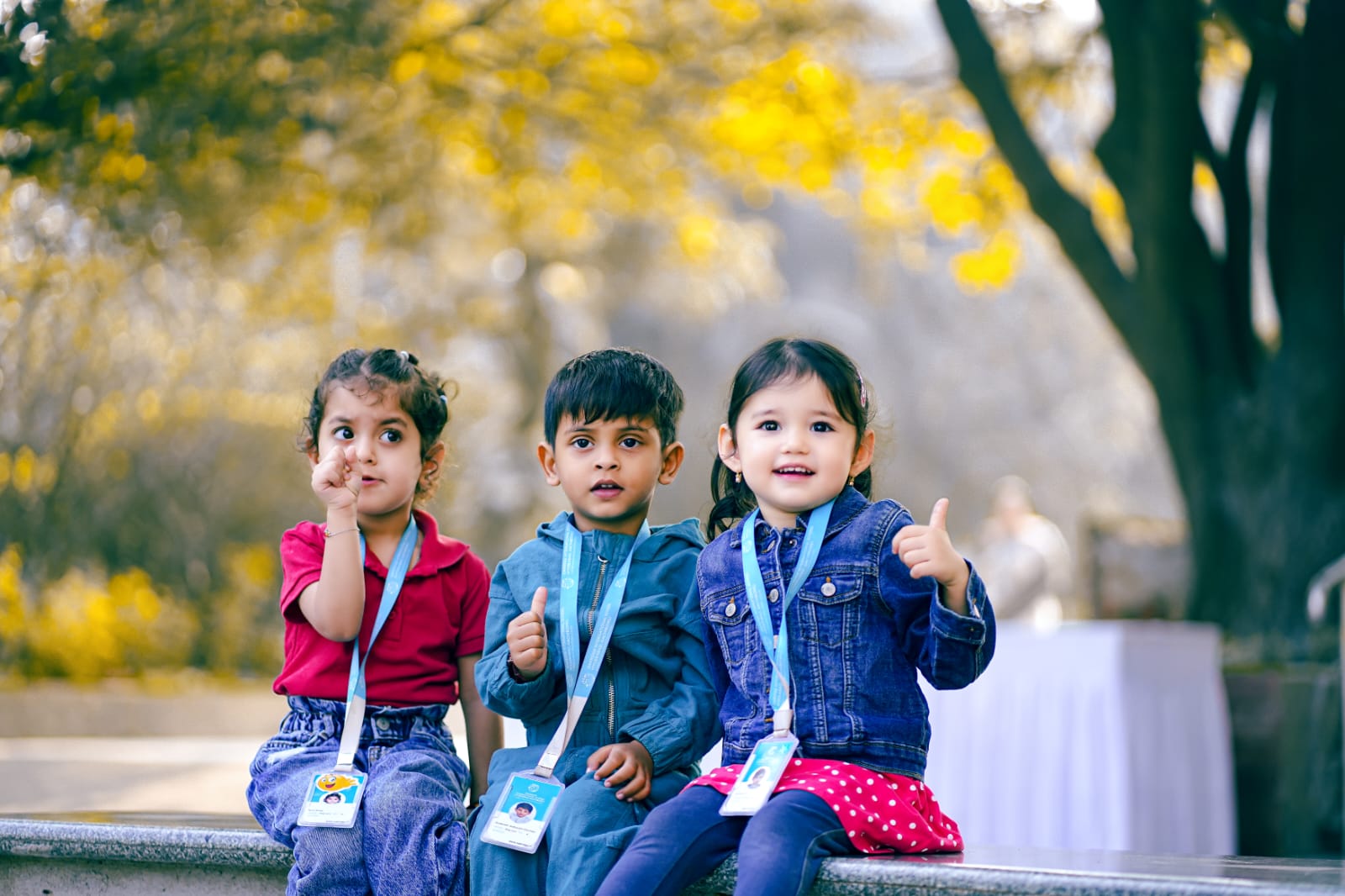
KHOJ 2025 – Udaan Se Pehchaan Tak celebrated exploration and identity as young learners discovered their voice.
KHOJ 2025 – Ek Satya, the grand finale, reimagined the life of Buddha through a contemporary lens, an extraordinary synthesis of philosophy, movement, music, and meaning, marking 25 years of Oakridge with grace and depth.
Watching the final performance conclude, a quiet thought crossed my mind – this was Bloom’s Taxonomy, unfolding naturally, without labels. Because when students create, ownership rises and behavior drops!
Purpose replaces pressure. Learning becomes visible.
Week Without Walls was more than an annual event. It was a shared belief in action, by leadership that trusted the vision, teachers who designed with courage, parents who supported with pride, students who poured their heart and soul into every experience, and support staff who ensured every detail worked, so each moment could matter.
This was not just a celebration of talent. It was evidence of learning done right. Teaching with old frameworks, unchanged, is not tradition, but professional risk! The future of learning is already here. And at Oakridge Gachibowli, it didn’t sit in a pyramid. It walked the stage!
Written by Ms. Preeti Shah,
Math Facilitator,
Grade 9 & 10