Are Programmes Like Model United Nations Preparing Students for the Future?
- 31 August 2026

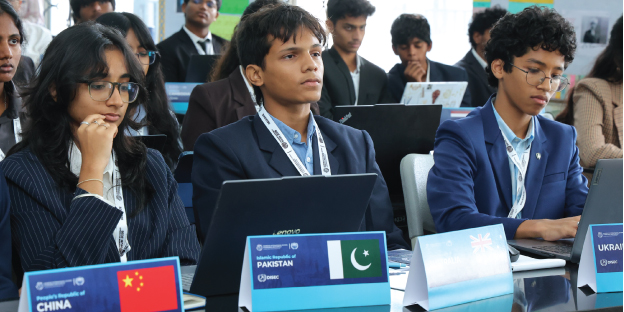
Since the world is characterised by continual change, parents are now looking beyond academic achievements when they choose a school. Although good grades are still important, they make up only one aspect of preparing students for success in the future. Young people also need to have confidence, be able to communicate, show leadership and have the capacity to understand and get on with people from different backgrounds.
We at Oakridge International School in Bachupally think that education should prepare students not only for exams but also for life, and that is why students take part in significant student-initiated activities such as the Model United Nations (MUN), which helps them to acquire the skills, attitude, and global outlook necessary for success in a connected world.
Model United Nations is not merely a co-curricular activity; it is an immersive learning experience which enables students to become confident communicators, thoughtful leaders, and responsible global citizens.
What does Model United Nations entail?
Model United Nations is an academic activity which simulates the work of the United Nations by having students take on the roles of different countries and take part in discussions concerning global issues that affect communities all over the world.
Participants investigate international issues, develop policy stances, take part in official debates, negotiate with their peers, and work together to draw up solutions. Through this process, students gain an understanding of how global institutions operate and also obtain first-hand experience in diplomacy and decision-making.
The topics that are usually dealt with at the MUN include climate change, human rights, international security, education, public health, and sustainable development. By discussing these topics, students are encouraged to think critically about actual world problems and to look into practical solutions through dialogue and cooperation.
Most importantly, students come to realize that their own voices are important and that constructive conversations can about bringing about real change.
Building Confidence Through Public Speaking
A major advantage of taking part in Model United Nations is that it helps to build confidence.
For many young people public speaking can be intimidating. The MUN provides a supportive environment which enables students to become more at ease when putting forward their ideas in front of their peers. By means of giving speeches, taking part in moderated discussions and attending committee meetings, students learn to communicate clearly and with a purpose.
The confidence that students gain from taking part in conferences and debates enables them to express their own views, ask questions, and make substantial contributions to group discussions. The effects of these experiences are usually positive and last well beyond the MUN.
Students who become confident as a result of giving speeches often take a more active part in class, in leadership positions, in presentations, and in community projects. They learn to have faith in their own voice and to express their ideas effectively.
Strengthening Communication Skills
One of the most valuable skills that students can take with them into higher education and their future careers is communication.
In a Model United Nations students are expected to communicate clearly, to listen carefully and to interact respectfully even when dealing with people who have different opinions. They acquire the ability to present evidence, to construct logical arguments and to persuade others by means of thoughtful discussion instead of confrontation.
MUN also works on developing the ability to listen actively. In order to propose solutions or enter into agreements, delegates have to understand different points of view. Through this process students learn the value of empathy, respect, and effective collaboration.
The ability to communicate in this way is useful to students in all aspects of school life and equips them for the future university and professional situations where teamwork and interpersonal skills are necessary.
Developing Critical Thinking and Problem-Solving Skills
The kinds of problems dealt with at the MUN are usually complex and have many aspects to them. Simple solutions are almost never available.
Students are encouraged to look at issues from different points of view, assess the evidence, spot the difficulties, and suggest practical solutions. Instead of simply memorising information, they learn to think for themselves and engage with ideas in a critical manner.
When looking at issues such as environmental sustainability, access to education, healthcare, or international relations, students should investigate the causes of the problems and think about the consequences of various decisions.
This process enhances analytical thinking and enables students to become confident in solving problems. The skills acquired in this way not only help with academic achievement but also prepare them for the requirements of university studies and future careers.
Expanding Global Awareness
Students today will have to live and work in a world which is becoming more and more interconnected. It is no longer optional to understand global issues and to appreciate different points of view; it is in fact essential.
Students can make use of Model United Nations to find out about different countries, cultures, and worldviews. When they act as delegates for nations other than their own, they gain a more extensive understanding of the international challenges and of the factors that affect global decisions.
This experience enables students to develop empathy and a greater cultural awareness; they start to realise that people may deal with the same issue in different ways due to their own experiences, priorities, and circumstances.
When students deal with global issues in a meaningful manner, they become more aware of their responsibilities as global citizens and gain a greater appreciation of the part they can play in making the future better.
Learning Leadership Through Collaboration
People often think that leadership means having the ability to direct others. In fact, genuine leadership involves collaboration, good communication, and the capacity to get people together.
Students can make use of Model United Nations to develop these important leadership skills. In order to achieve their common objectives, the delegates have to reach a consensus, negotiate agreements, and work with their peers.
Students are taught that effective leaders pay close attention, take into account different points of view, and concentrate on finding solutions rather than on disagreements. They also learn how to influence people by showing respect, being well prepared, and taking thoughtful action.
The experience gained in these areas contributes to the development of leadership skills which then carry over into student councils, community initiatives, academic projects, and future professional activities.
Preparing Students for a Global Future
More and more universities and employers place importance on students who are able to show that they have leadership qualities, good communication skills, the ability to think critically, exhibit initiative, and have a sense of global awareness.
Model United Nations enables students to develop exactly the sorts of skills in question. It gives them skills which can be applied successfully in a wide variety of areas, such as business, technology, law, international relations, science, entrepreneurship, and public service.
More importantly, the MUN enables students to gain confidence in their capacity to take part in the world, to solve problems, and to make significant contributions to society.
At Oakridge International School in Bachupally we are determined to provide learning experiences which encourage students to think beyond the classroom and enable them to meet the opportunities and responsibilities of the future.
In Model United Nations students achieve more than just representing different countries; they learn how to work together, take leadership, communicate, and motivate change. They start a journey from being delegates to becoming changemakers.
Discover the Oakridge Difference
If you are looking for an international school that combines academic excellence with leadership development, global learning, and future-ready skills, Oakridge International School, Bachupally offers opportunities that empower students to thrive.
Book a school tour today or contact our admissions team to learn how your child can benefit from transformative experiences such as Model United Nations and become a confident leader for tomorrow’s world.