Conceptual Learning in Schools: Building Deeper Understanding at Oakridge Vizag
- 21 September 2026

Real learning quality shows up in what a child can do with an idea, not only in what they can recall of it. That distinction sits at the heart of conceptual learning, and it shapes how teachers at Oakridge International School, Visakhapatnam plan lessons from the earliest primary classes through to the senior secondary years.
Parents rightly want confidence that this depth is consistent, not dependent on one teacher, one term, or a single fortunate class. It is a common question among families researching the best international schools in Visakhapatnam. That confidence comes from how planning, teaching, and assessment connect with one another across grades.
Planning for Depth, Not Just Coverage
At Oakridge Vizag, planning starts with the concept itself rather than a list of topics to work through. Ms. Deepthi Tata, Head of Secondary Years, puts it plainly: “Learning for depth begins with purposeful curriculum planning focused on essential concepts, knowledge, and skills.”
Conceptual learning is not about knowing less; it is about understanding what students know well enough to explain, connect and apply it. This is a defining feature of the Oakridge Visakhapatnam academic programme at every stage.
Consistency does not happen by chance. Ms. Dimple Thompson, Head of Primary Years, explains how this works: “In the Primary Years, teachers work closely together to ensure learning builds step by step across grades. Regular planning and curriculum mapping help us avoid gaps and unnecessary repetition, while ensuring key concepts are revisited at the right level of challenge as students progress.”
A similar process continues in Secondary, where collaborative planning and transition conversations help identify topics needing reinforcement before a student moves up a grade. Because concepts are mapped this way, a child moving between grades keeps building on familiar ideas rather than starting again. It is exactly this kind of continuity that parents comparing international schools in Vizag should expect to see explained clearly.
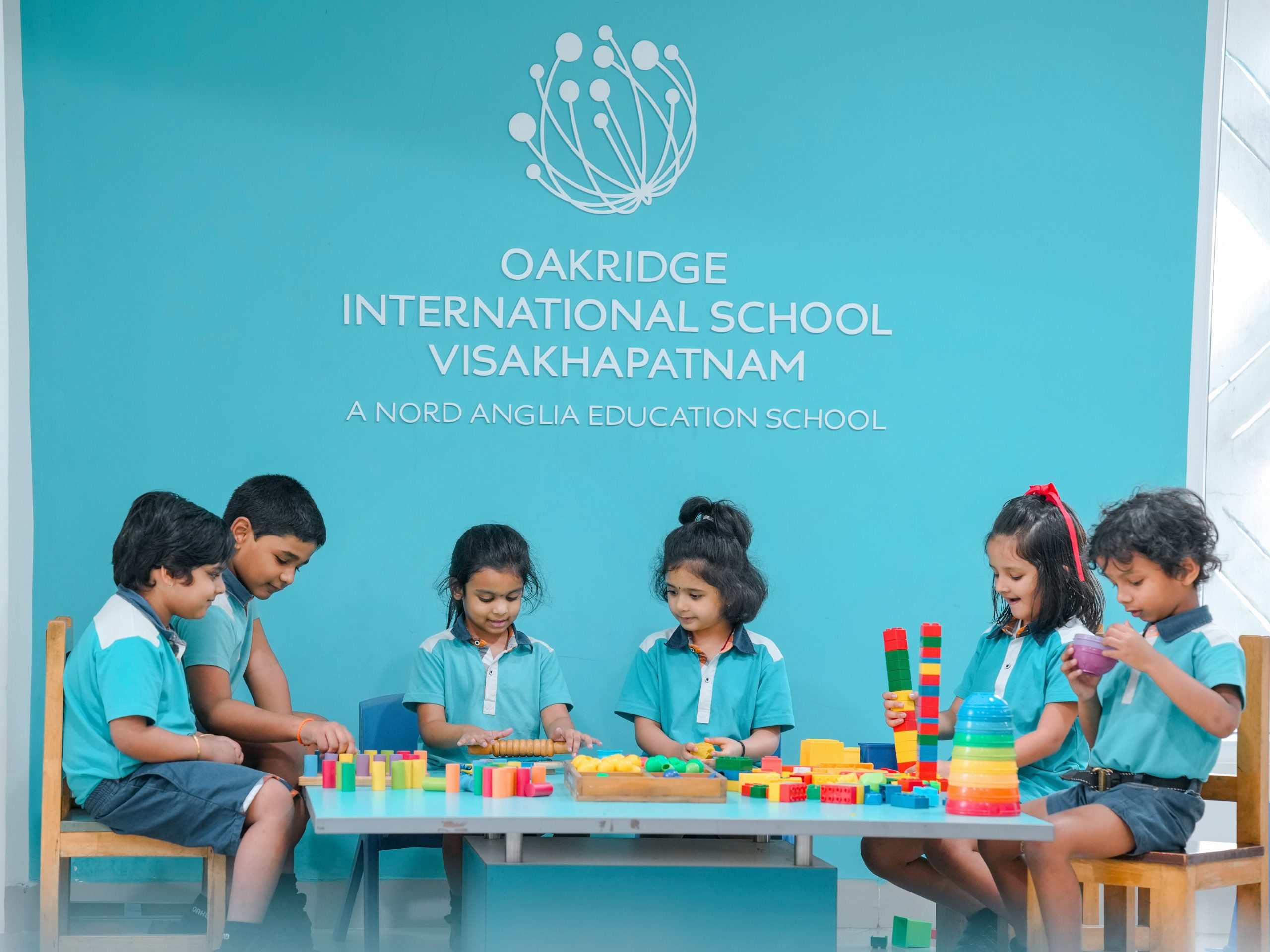
The Oakridge Vizag learning approach shifts by stage. In Primary, it often means learning by doing. “Students learn concepts in depth through carefully planned, hands-on and inquiry-based activities that allow them to explore, apply, and connect their learning to real-life experiences,” says Ms. Dimple.
In Secondary, the same principle takes a more analytical form. Ms. Deepthi explains that through “questioning, discussion, application, and problem-solving,” students are encouraged to move beyond knowing a fact to explaining, analysing, making connections, and applying their understanding in different contexts.
The clearest evidence of depth is not always found in a test score. “Parents should see their child becoming more confident, using what they have learned in different situations, and talking about their learning with understanding,” says Ms. Dimple. “They may also notice steady improvement in skills, participation, and independence over time.”
Ms. Deepthi makes a related point: results matter, but they are not the only indicator of meaningful learning. In her words, “these reflections at home are often the strongest evidence that learning is deep, consistent, and lasting.” If a subject is being taught thoroughly, a parent should be able to ask their child what they learned and hear an answer in the child’s own words, not simply a repeated definition.
This kind of depth and consistency is the result of deliberate structure, not coincidence. At Oakridge International School, Visakhapatnam, it is planned for, mapped across grades, and checked at every transition.
This structure, not any single lesson or teacher, gives parents a clear, dependable picture of their child’s progress over time. Parents who want to understand this further, for their own child’s subjects or stage, are always welcome to speak with the school’s academic leaders.